Friday, January 5, 2018

The Piano

The Heintzman piano is like a distinguished  lady and for over a hundred years has held a special place  in our  family homes in Toronto, Clarkson, Saskatoon, Calgary and  Edmonton.
 The piano was built in 1912 and purchased  by the parents of Mr. and Mrs. Gardhouse as a wedding  gift  for  their children.  The Gardhouses lived across the street from my parents in Toronto and "Gardy" worked for the city of Toronto.   His wife Jessie was a stay at home mom.  Mr. Gardhouse (picture shown) visited us in Calgary and was so pleased to see his old piano.  The piano was much loved for many years but eventually, in 1966, their family grew up and the Gardhouses no longer had room for the piano.  They were going to give it to the local church but when my mother was talking to them, they mentioned some repair work needed  plus  the  problem getting it out of their basement.  The lower level had been developed around the piano and there was no way it could be moved upstairs.  The church decided it would involve extra costs so turned it down.  My mother talked to me and we decided we would  take it, so had to  find a way to get it out of the house.  We had a piano specialist/mover come out and piece by piece, the piano was taken apart.  Carefully it was transported upstairs and laid out on the front lawn, then the time consuming task of reassembling it.
 Fortunately the basement had enough moisture to keep the piano from drying out but over the years the "action" had deteriorated and  needed  major repair work.  The piano specialist took it to their shop and redid the action, then delivered the piano to us in Clarkson.  The piano fit nicely in the dining room and Susan and Bob started taking piano lessons.  In our house on Robillard Road  it had plenty of use - my mother played it when she visited, friends and  uncles and aunts joined us at the  piano and I worked on tunes (mostly hymns) remembered from my teen years.  Grandma Moore in the photo below and Grandma Shillington in above photo,  it was a real treasure to have in our home.

In late 1968 we moved to Saskatoon and Susan started music lessons with May Woodley Benson, a music teacher that I remembered from my younger years.  We were only in Saskatoon for just over a year though and soon off to Calgary where the piano took its place in our
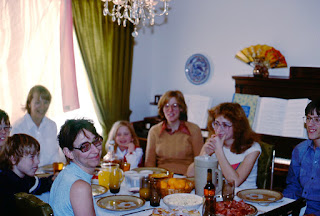
dining room.  Once again, Susan continued her music lessons and the piano had lots of use.  Eventually though, Susan grew up and music lessons came to an end.  
Susan got married and moved to Saskatoon and soon after we moved to Edmonton.  Instead of taking the piano with us, Susan asked for  it so we had it shipped to her in Saskatoon.   Susan's children, Pam and Arthur  both took piano lessons and the piano was in use by another generation of children growing up.  More recently, Susan's family had grown and she  was downsizing. Space was limited and
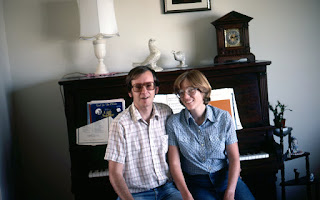
there was no room for a piano.  Finally, it was shipped to James in Edmonton where it was quickly put back into action for two upcoming piano players, Oliver and Jamie.

It has been there for four families and  with the beautiful sound of a Heintzman,  we hope to continue our  enjoyment of the grand old lady for many years to come.


Monday, August 14, 2017

Rio de Janeiro


In 1986 my son-in-law's company sent him  to Rio de Janeiro  on assignment  and  because  he would be gone for at least a year,  my daughter and  their eight month old baby accompanied  him.   Shortly before they returned home,  they suggested it would be an opportunity for me to see Brazil and  encouraged me to visit  I had some unused holidays  so no problem, but my husband couldn't  get away and I would have to travel  on my own.

Everything was set up and soon  I was  on my way.  First a flight to Toronto, connecting flight to Miami and finally another plane change to Rio, what could possibly go wrong?   It all went smoothly until I reached Miami where I was informed that my Argentine Airlines flight had mechanical problems and would not be heading out  to Rio until the next morning.  However, the airline would provide me with a hotel room and meal voucher for the night and  assured me we would be on our way by dawn.  How to inform my family of the delay and what if they were not at home or already waiting at the airport when I called.  Finally I decided to call my husband  and have him phone and bring them up to date  as I had no idea when I would be arriving in Brazil.  Their apartment was almost an hour drive from the airport and phone calls to the airport about flights would be answered in Portuguese.  I was quite concerned about them getting the correct flight information as I thought it would be  evening when I arrived.  I really did not know what I would do if they had not received the message and I was stranded overnight in a foreign airport.

I have always been a nervous flyer and knowing my plane was having problems  did not make the evening any better for me.  A party was going on in the hotel room adjoining  mine (I made sure the door was locked between the rooms) so getting some rest after a challenging day was not easy but eventually I drifted off.  The next morning I was in the departure lounge bright and early but there was still no word on when the plane would be ready.  One hour, two hours, finally after more than four  hours we were told that we could start boarding.  The plane was full and as soon as I sat down, it was obvious to me that English was not the first language of my fellow passengers.  Everyone would be quiet when the attendants made an announcement in Portuguese  but would start chatting loudly again when the message was repeated in English.  I couldn't hear a word of what they were saying. However, we were soon  flying off to Rio and just the thought of it was exciting.  At one point I looked down and in the bright cloudless sky, was able to see a long curved line through the South American forest, it was the Amazon River.  The day long flight continued  and I  was treated to  a  great lunch and supper along with free beverages.   The meals  provided by the airline were impressive as this was back in the days when airline food was tasty and would be served on china dishes with real cutlery,  Finally, darkness was falling and with it the buildup of thunder clouds and rain.  It  reminded me of an old song, "What do they do on a rainy night in Rio?"  Then the pilot announced that we would be arriving in Rio in 30 minutes and we should have our seats upright and seat belts on.  As we approached  Rio, I heard a click and a groan from underneath the plane and nothing else, a few minutes later the same click and groan and nothing. This pattern of click and groan continued.   Everyone grew silent as the passengers realized the wheels were not coming down.  We started circling over Rio, the attendants were strapped in their seats and every few minutes, we heard the  ominous sound of the click and groan again.  When I saw one of the stewardesses crossing herself I knew we were in trouble.  This high tension drama continued as we circled  through storm clouds and watched the flashes of lightning.  I was already imagining the news headlines, "Canadian among those lost in Brazil crash" - ooh, think of something else.  It was now after 10 p.m. and this ordeal had lasted for over half  an hour, the silence in the plane was deafening.  Suddenly we heard, click, plunk!  The wheels were down, everyone applauded and cheered,  we were safe!   The plane landed and soon I was back on the terra firma.  As I left the plane, in single file the passengers were slowly walking through a long grey passageway and I noticed there were  armed guards standing  along the way.  I felt like I could disappear into  one of the side rooms and no one would notice.  Travelling alone, I was quite uneasy so spotting my family when I emerged at the other end was a big relief.   A customs agent who examined my passport must have thought I looked nervous so gave me a big smile and said, "Bon jour!"  I felt much better.  My luggage was not on the carousel so that was the next challenge.  Evidently it had arrived on an earlier flight and was placed in the airport manager's office for safekeeping along with the luggage of another passenger who had also been delayed in Miami. Years later when I once again visited Rio, the airport had been upgraded and the scary grey passageway was gone.

Almost 24 hours  after leaving home,  I was relieved to be safe and sound in Rio.  After a long drive we finally reached the  apartment compound and  were confronted by an armed guard at the entrance.  He  was checking out everyone entering the large  fenced enclosure  which was home to some  five thousand people.  He didn't just have a revolver, he had an assault rifle so no one was going to argue with him. I soon found this type of security and very high walls were  commonplace in Rio.  Life in the apartment presented challenges and one of  the biggest was dealing with local water.  The water was not safe to drink or even to brush one's teeth. When my daughter  bathed the baby she would fill  a small inflatable children's pool with bottled water and place it in the bathtub.   The toilet was an odd experience, when it was flushed, the water from the tank which was high up on the wall, ran down and bubbled up with a great flurry into  the toilet before finally draining down.  One tended to flush, then step back as far as possible to avoid being splashed by the contents of the toilet.

Ten days flew by quickly with much sightseeing and visits to the famous beaches noteworthy for their  curvaceous women in skimpy bikinis.  At a local bargain store a soft drink brand was being featured and  free samples of the soft drink  mixed with rum were being handed out.   In other stores coffee and chocolate were the big attractions. 

Finally it was time to return home  after a memorable visit.


Thursday, March 10, 2016

Saskatoon in 1946


By the end of April, 1946 we finally moved to Saskatoon.  It had been a long winter with mother and children staying with the grandparents on the farm and Dad staying with his father in the city.  

When we returned to Saskatoon after the war, Dad thought he would be able to get some sort of Veteran's housing since he had a family, but because he had only been to Alaska and not overseas, he was not high on the priority list.  Available houses were almost non existent in Saskatoon and when he did find a house, his hope of moving in soon fell through.  He purchased a tenant occupied house, but when he tried to get them to move out they flatly refused. They had no place to go, so it looked like a lengthy battle with an elderly couple was about to ensue.  Finally my father said they could stay if they bought the house from him and they agreed.  Back to house hunting again.  In April he put an offer in on a house on Main Street, a few blocks from Broadway Avenue and soon we moved into our new home.

My Great Grandma Atkinson in 1946
with Dad, Bill and me

It was a small two storey older house with three bedrooms and bathroom upstairs.  The main floor had a small kitchen with an old fashioned wood burning kitchen range and a refrigerator which my parents had just purchased, a dining room and a living room which had been given many layers of wall paper over the years.  In the basement there was a big coal burning furnace and in the corner, a coal room with a chute leading from the outside for incoming coal. There were two heat vents on the main floor, but only one on the second floor and it was on the floor in the middle of the hall.  Once my father had stoked the furnace and added coal in the morning, there was an ongoing competition by the children  to see who would get to stand on the hot air vent as the warm air rose to the second floor.  We would shove each other around as we tried to gain possession of the valuable territory on the vent and bask in the comfort of the warm air making its way upstairs. 

About a year after we moved in, my parents got rid of the wood burning range and purchased a propane stove.  It was before the days of natural gas so the stove was connected to a large propane tank outside the house.  

For my parents, owning a home was something new, and having delivery of milk and bread to the door was a great convenience.   When he saw us moving in, the milkman from Co-op Dairy stopped by the house, welcomed mother to the neighbourhood and offered her daily milk delivery.  My mother enthusiastically agreed and all was fine.  That is, until a few hours later the nice milkman from Purity Dairies showed up at the door to welcome her and  convinced her that he too would provide great service.  She couldn't resist and said yes to him as well.  Fortunately, when the milkman from Palm Dairy arrived at the house, my father happened to be home and he was able to prevent her agreeing to have three milkmen.  However, we had two milkmen for as long as we lived in the house, they delivered on alternate days and my mother just didn't have the heart to discontinue either one.  I might add that milk in those days was being delivered by horse and wagon so it probably confused the horses who usually knew the route quite well but would stop at our house every day, not realizing it was supposed to be every other day.   In addition to  daily milk deliveries, we also had  bread delivery, also by horse and wagon.  As you can well imagine, the amount of time spent by horses in front of our house was evident by the manure that was accumulating. 

My Great Grandma Atkinson, my father's grandmother lived about two blocks away from us and in those days, kept a few chickens in her backyard. She was a lovely lady and I used to enjoy visiting her.

I noticed by 2015 our old house had been demolished and a new house built in its place.


Sunday, March 6, 2016

Communication now and then

I was sitting in a busy waiting room recently and as I looked around,  it seemed everyone was connected to a phone with a screen and were typing or receiving messages, totally oblivious to anyone else in the room.   The receivers of the messages might be someone nearby or maybe they were across the world, because,  with the easy spread of thought and ideas, no one is ever out of touch. When you think about it, what is happening is absolutely amazing. This type of communication might seem ordinary, common place, whatever you want to call it in our modern world, but for me as a senior, it is mind boggling,  something  we never could have imagined.  In my childhood there was a Dick Tracy comic strip and the main characters had wrist radios, walkie talkies I suspect, that they used to communicate.  That was considered quite futuristic, certainly not something that would happen in our lifetime.
My grandparents worked together on the farm

As I watched the instant communication going on around me, I thought back to my grandparents' farm where we had spent a few months after the Second World War.  At that time, the only lifeline to the outside world was a party line telephone. You would lift up the receiver and turn a crank on the side to get the central operator or a specific number of crank turns to get a neighbour. There was no privacy, everyone listened in on each other's calls. That party line really was the lifeline for the early farmers, "Quick, we need a midwife," "Send help, there's been an accident," "Sad news, our son is missing in action," "Good news, our daughter is getting married."


When my grandparents got married on August 28, 1901 in Mascouche Rapids, Quebec, it was their intention to homestead in Saskatchewan.  That dream was finally fulfilled in May, 1905 when my grandfather first set foot on his own homestead land eight miles from the present town of Rosetown, Sask.  Grandpa had shipped his household effects, equipment and lumber for his house to Saskatoon as there was no railway to Rosetown at that time. Everything then had to be hauled about a hundred miles by horse and wagon to the future farm.

  His father also staked a homestead claim as did a cousin who settled nearby.  On June 30, 1905 my grandmother and young son  Norman reached Saskatoon by train and two days later arrived by horse and buggy at the homestead land where a tent awaited them as their temporary residence.

Communication, there was none.  No phones, letter writing meant dropping letters off at the post office when you went to town.  It was isolation.  Although my grandparents were not yet thirty, they only saw their family members twice more in their lifetimes when they took train trips east many years later.  My grandfather's father, who had accompanied them west, passed away less than a year later. Phone lines eventually went in but luxuries like running water and inside plumbing and electricity were not available until the 1950s.

No wonder I look at communication today with such astonishment.

My grandparents with nine grandchildren in 1946
Three more  Mary, Donna and Bob were born later
Back row: Eunice, Judy, Grandma, Alan, Grandpa, Earl
Front row: Diane, Shirley, Norma, Bill (standing), Jim (in front)


Thursday, March 3, 2016

Another winter on the farm


The old farm house had two small upstairs bedrooms with steep, sloped ceilings while  downstairs there was  a small  bedroom just large enough for a double bed. Also on the main floor was a dry bathroom with a chemical toilet and a sitting room which was used as a kitchen in the winter.
Mother and family in front of Grandpa's Willis car
1946
  
We had no electricity or running water and relied on the Aladdin lamp and coal oil lamps for light.  My grandparents, who were now in their late sixties, had us underfoot once again, only this time there were three children. When I think back to those days, it must have been hard on everyone.


During our time on the farm in 1942 my brother who was two at the time and I shared the chesterfield bed in the sitting room with mother.  However in 1945, as the chesterfield bed was not big enough to handle mother and three children, in desperation, they shifted me to an upstairs bedroom.  

In the sitting room, the kitchen range and a wood burning space heater generated the heat for the small farm house.  There was a door off the sitting room leading  to a steep staircase to the upstairs. Heating this small house was difficult so in an effort to keep the main floor warm, this door was only opened late in the day when heat was needed for the upstairs bedroom. Unfortunately, when you have a  cold winter, not much heat drifted up when the door was opened.

The combination of a cold January, an unheated upstairs bedroom and freezing cold bedding that was beyond the ability of a mere hot water bottle to warm up, made for a terrible sleeping setup for me.  Whenever I think back to that upstairs room on the farm, I can't help but think that if there was a gold medal for  the  coldest place I've ever slept, this would have been the winner by far. I have never been so cold in all my life.  I had lots of blankets piled on top of me, but as a skinny nine year old, I wasn't able to generate enough body heat to warm the bed so would stay in one place and not move a muscle all night, the sheets around me were like ice cubes.  If I unfortunately had to get up during the night and use the chamber pot, it and the hot water bottle which I had finally shoved aside, would be frozen in the morning.

The extreme cold persisted through much of January but finally, as we got through February and into March the weather started to moderate and I was able to give up the rides to school on the stone boat, and walk the half mile on my own.  It had been so cold and there had been so much drifting snow that the caragana shelter belt surrounding the farm was covered in snow and a very hard crust had formed on top.  It seemed quite odd that I was able to walk over the tall hedge on this crust of hard snow without sinking, but it was  probably similar to the crust of snow that forms on ski slopes.

Meanwhile, my father had returned to work in Saskatoon.  He  was staying with his father in a small one bedroom apartment over a store on Broadway Avenue  while trying to find a place for our family to live.  His two younger siblings had also returned from Victoria so all  four of them were in the tiny apartment.  

Getting back to our pre-war lives was proving to be quite challenging.
My grandparent's farm


Picture of the farm house

Monday, February 29, 2016

Country School

After the war my father went house hunting in Saskatoon, but soon found it was more difficult than he expected.  It looked like we would be at the farm for a while, so my mother enrolled me in a small country school until we got settled.  Cleland School, located about nine miles from Rosetown, was the same school my mother had attended as a child, and was located a half mile from my grandparents' farm.  In mid December 1945 I started my new school.
My mother attended Cleland School in 1924
She was third from the left, second row

Cleland School was the type of turn of the century schoolhouse you would see today if you were to visit any of the heritage villages located across Canada, but in 1945 small rural schools such as this were still in use in many places including Saskatchewan.  To describe the school, I would say there were about twenty desks in the classroom, but only nine students and they were seated in rows by grade; three first graders, two second graders including my cousin Diane, then I think there were two in grade six.  I was the only one in grade four and a boy named Russ was in grade nine taking his classes by correspondence with the teacher overseeing his work.  The map of the Dominion of Canada hung on the wall along with a picture of King George VI, and the alphabet was carefully written in chalk across the top of the blackboard in upper and lower case.

Russ helped out by arriving early in the morning to start the fire in the pot bellied stove and would make sure there was a supply of wood to keep the classroom warm during the day.  Outside there was a small barn and many students rode their horses to school, while others, including me relied on other means of transportation, including a horse drawn stone boat.  A nearby farmer, Mr. Black would take his son to school each day on a stone boat, which had a wooden frame about six feet square and looked like a small raft.  It was a cold winter with a lot of snow, so my grandparents asked if he would swing by and provide transportation for me as well.  Riding the half mile to school on a stone boat was quite a unique experience.

Each morning the teacher, Miss Purse would make sure all the students had work on hand, then would start teaching the grade ones and gradually make her way across the room, one grade at a time.  At lunchtime we would all sit around a big table with the teacher and chat as we ate our sandwiches, sometimes playing games like "I spy with my little eye" or just discussing events on the farm.

Soon after I enrolled, it was Christmas and a community supper at the school was a big occasion for the local farm families.  The tables were set up in the school basement and people crowded into the room, loaded down with roasted turkeys, home baking and all the goodies that make up a marvellous holiday feast.  I can't think of any  celebration at school that could ever surpass Christmas at Cleland that winter.  Everyone was so happy that the war was over and families were back together again.  Even Santa Claus made an appearance.

I attended Cleland for five months before we moved to Saskatoon where I went   to my third school in Grade Four.

Thursday, February 25, 2016

Travel in 1945

Remembering our train trip to Saskatoon in December 1945,  there were no other travel options open to us.  Now, you can also fly, drive or go by bus from Vancouver to Saskatoon and can reach  your destination in a few hours,  not a couple of days.  Train travel is a great holiday adventure and the Canadian Rockies are spectacular,  but it was a long trip for a family anxious to get back home. As far as driving  a car from Vancouver to Saskatoon, not possible, the road was not even open in the winter.


There was a gravel road through the mountains which  had been completed in 1940 at great expense and connected Golden and Revelstoke.   It was called  the Big Bend Highway and was said to be drivable if you had nerves of steel.  Everyone had heard the horror stories about this highway, and even the thought of  having to back up on a switchback to allow another vehicle to  pass would send shivers up your spine.  One story I recall was from a family member who took the bus  to Vancouver in the early 1950s.   They were on a narrow, hairpin curve on the Big Bend, and the bus driver and  a woman driving a car coming toward him had both stopped and were arguing. The driver wanted the woman to back up so he could get the bus through but she was scared and refused.  Finally,  the bus driver had no choice but to back up.  For the passengers seeing the rear of the bus hanging over the steep mountain cliff as it slowly edged back, allowing the woman to pass was as frightening as it gets.  Everyone  breathed again when she was clear and the bus proceeded.


Sometimes, if people wanted their car on the other side of the mountains, they just shipped the vehicle by train and picked it up when they reached their destination.  Flying was not an option as the first commercial airline, Trans Canada Airlines, or TCA as it was known was just getting established at that time.

Oh well, you might say, at least people could keep in touch by phone.  Sorry, it was not so easy.  Long distance was expensive so calls  were a luxury and only placed when absolutely necessary.  We would write a list of subjects to be discussed, then rush through them to get off the phone in five minutes or less.  Christmas was the busiest time for calls and often you would try for hours to get a call through to someone in another city.  Unfortunately, many of these calls would start out with, "What's your weather like?" 

As for our trip to Saskatoon, my mother and children got off in the  Biggar, SK train station where we were picked up by my grandfather and once again taken to the farm.   My father continued on to Saskatoon to  check out his old job and find a house for the family.